No: under Egypt cannabis laws, cannabis is completely banned, whether it is weed, hash, oil or CBD. The key text, Decree-Law No. 182 of 1960 on combating narcotics, toughened by Law No. 122 of 1989, lists cannabis “in all its forms and under any name” as a narcotic, with no THC threshold at all. There is no medical cannabis programme and no official tolerance for small amounts.
The penalties are among the harshest in the world. For simple possession for your own use, the law provides for a prison term and a fine of 10,000 to 50,000 Egyptian pounds. As soon as the prosecution alleges selling, transporting for trafficking or importing, the penalty becomes life imprisonment, or even the death penalty. European foreign ministries say the same thing in their travel advice: the UK Foreign Office warns that drug offences in Egypt, even for small amounts, can lead to life imprisonment or the death penalty, and Germany’s Federal Foreign Office notes that even minor drug offences are punished with harsh prison sentences.
The paradox is that hash, known locally as hashish or bango, has been part of Egyptian life for centuries. That cultural presence protects nobody, least of all a foreign tourist. Whether you are flying to Hurghada from Paris, Berlin, Madrid, Amsterdam or Manchester, here is exactly what the law says in 2026, what you risk in each situation, the specific case of CBD (legal in France and in many EU countries, banned in Egypt), what your embassy can and cannot do for you, and how Egypt compares with Europe.
The key points in 30 seconds
• Cannabis banned in all its forms (Decree-Law No. 182 of 1960), with no medical cannabis programme.
• CBD banned too, whatever its THC level: pack no CBD product at all, not even an oil or a balm, even if it is legal where you live.
• Personal use: prison and a fine of 10,000 to 50,000 Egyptian pounds; import or trafficking: life or the death penalty.
• Another trap: tramadol, strong painkillers and some other prescription medicines are controlled in Egypt and may need prior permission.
 Best-sellerSmall Bud AK-47from 0.90 €/gVoir
Egypt cannabis laws in 2026: what the text says
Egypt regulates drugs through one main text: Decree-Law No. 182 of 1960 “on combating narcotics and regulating their use and trade”. It has been amended several times, almost always to make it stricter. The major reform remains Law No. 122 of 21 June 1989, which rewrote the whole chapter on penalties: it is this law that sets the death penalty for importing and trafficking. More recent changes date from 2019 and 2020: Law No. 134 of 2019 extended it to synthetic drugs, and Law No. 19 of 2020 lifted the blanket ban on parole for people convicted under it. In February 2026, after a Supreme Constitutional Court ruling on how the schedules of synthetic drugs had been amended, the Health Minister reissued the schedules attached to the law. None of these changes touched the status of cannabis.
Cannabis “in all its forms”
Schedule No. 1 attached to the law, the list of substances treated as narcotics, leaves no grey area. It covers cannabis “in all its forms and under any name” (the 1989 version mentions hashish, marijuana and bango), whether it comes from the flowers, leaves, stems, roots or resin, male or female plant. It also covers:
- resins and resin preparations, “whatever their percentage”;
- extracts and oils, such as hash oil;
- powders and mixtures made from any part of the plant;
- tetrahydrocannabinols (THC), with their isomers and salts.
Updated since by ministerial decree, as the law allows, the schedule now also covers any active component of cannabis present in a product or preparation, “whatever its proportion“.
The plant itself appears in another list (No. 5), that of plants whose cultivation is banned: growing a single plant, even at home and for yourself, falls under the law.
No medical cannabis, no decriminalisation
There is no medical cannabis programme in Egypt. The 1960 text does regulate the medical prescription of narcotics in general, but no therapeutic cannabis channel has ever been set up, and that framework is irrelevant to a traveller. A European medical cannabis prescription, or the Schengen certificate that lets patients carry their medicine between Schengen countries, has no value whatsoever in Egypt. Personal use is not decriminalised either: it is a crime, tried as such. The only way out provided by the text concerns health: a person who comes forward of their own accord to the treatment committee of their governorate is not prosecuted and goes into treatment (Article 37 bis a). This scheme is aimed at dependent residents, not at a tourist searched with a small piece of hash.
Prison, fines, death penalty: the scale
The law sets no quantity threshold. What moves a case from one penalty to another is the intention the prosecution alleges: personal use, holding for someone else, selling or importing. Since Law No. 95 of 2003, the “hard labour” of the 1989 text has become rigorous imprisonment (sijn mushaddad, in principle 3 to 15 years) or life imprisonment. For personal use, the judge can still reduce the sentence on grounds of mitigating circumstances under the penal code; that is never a right.
| Situation | Article | Penalty | Fine (Egyptian pounds) |
|---|---|---|---|
| Possessing, buying or growing for personal use | 37 | Rigorous imprisonment (3 to 15 years); treatment of 6 months to 3 years possible for a dependent person | 10,000 to 50,000 |
| Being caught using in a place set up for drug use | 39 | At least 1 year in prison | 1,000 to 3,000 |
| Possessing or transporting with no intention to sell or use | 38 | Rigorous imprisonment | 50,000 to 200,000 |
| Offering or facilitating use, even free of charge | 35 | Life imprisonment | 50,000 to 200,000 |
| Possessing, selling or transporting for trafficking | 34 | Death penalty or life imprisonment | 100,000 to 500,000 |
| Importing or exporting, growing for trafficking | 33 | Death penalty | 100,000 to 500,000 |
Three details weigh heavily for a foreigner. First, importing a narcotic without a licence falls on paper under Article 33, the capital one: that is exactly the situation of a traveller who lands with cannabis or CBD in their luggage. Second, all these crimes except personal use are not subject to any limitation period: neither the prosecution nor the sentence lapses with time. Finally, confiscation is automatic: the products seized, any proceeds of the offence and the vehicle used.
What about CBD in Egypt?
It is the question many European travellers ask, because CBD is part of everyday life in much of Europe: CBD flowers and resins are sold in shops in France, CBD oils are found in pharmacies and health shops from Lisbon to Prague. The answer is clear: CBD is banned in Egypt, just like hash.
The reason lies in the text itself. Egyptian law does not reason in terms of THC content, as European law does with its 0.3% limit, but in terms of where the product comes from: anything derived from the cannabis plant, flowers, resin, oil or extract, is a narcotic, and the schedule covers any active component of cannabis “whatever its proportion”. A hemp product with almost no THC is still cannabis in the eyes of customs officers in Cairo or Hurghada. No CBD product can therefore be sold legally in the country, either in pharmacies or in shops.
In practice, that covers forms that look harmless too:
- CBD flowers and resins, obviously, even a 0% THC flower;
- oils and “full spectrum” or “broad spectrum” drops;
- CBD vape liquids and cartridges;
- cosmetics (balms, creams) whose label mentions cannabis or hemp.
Can you take CBD in your suitcase?
No. A CBD oil bought in a Paris pharmacy or a CBD flower bought legally in Lyon becomes an imported narcotic the moment you land in Hurghada, Sharm el-Sheikh or Cairo. The conclusion is simple: nothing in your luggage, neither in the hold nor in the cabin, and that includes the last pre-roll forgotten in a jacket pocket.
Keep your CBD flowers and CBD resins for home. They are legal in France and in many EU countries under 0.3% THC (check the rules in your country; they are not legal in the UK or Italy, for example), and they will still be waiting for you after the holiday. If you want to know what CBD can and cannot do, our page on the benefits of CBD according to science sums up the research honestly.
Organic Amnesia
Full spectrum organic flowers grown in France, under 0.3% THC, from a lab-tested batch. Legal in France and in many EU countries: check the rules in your country. To enjoy at home, never in the suitcase.
What a European tourist risks
Hurghada, Sharm el-Sheikh, Marsa Alam, Luxor, Cairo or Dahab: the law is the same everywhere, and the all-inclusive resorts of the Red Sea are not separate zones. A tourist has no special status, whatever their passport. The UK Foreign Office travel advice for Egypt sums it up: possession, use or trafficking of illegal drugs, even in small amounts, can lead to life imprisonment or the death penalty, and people who get a life sentence on drugs charges normally spend the rest of their lives in prison. The German Federal Foreign Office adds that foreigners have recently been sentenced to life in some drug cases, and that the death penalty is provided for in particularly serious cases.
In practice, this is what awaits a traveller caught with cannabis or CBD:
- Police custody and pre-trial detention, sometimes long, before any trial;
- proceedings in Arabic, with a local lawyer to find and pay for yourself;
- long prison terms in harsh conditions, far from family;
- for a foreigner, usually deportation at the end of the sentence.
What your embassy can and cannot do
If you are arrested, ask the Egyptian authorities to inform your country’s embassy or consulate. Most European countries are represented in Cairo, and if yours is not, EU law (Directive (EU) 2015/637) lets an unrepresented EU citizen turn to the embassy of any other EU country, which must help on the same terms as its own nationals, arrest and detention included. Consular staff can typically visit you, contact your family, give you a list of local lawyers and check that you are not treated worse than local prisoners; the UK guidance on arrest abroad spells this out in detail. No embassy can get you out of prison, get you special treatment, interfere with the Egyptian courts or pay your legal costs or fines. Travel insurance will not cover any of this either.
Coming home: customs in Europe
The risk does not stop at Egyptian passport control. Bringing cannabis back into any European country is a drug import offence, including where cannabis is otherwise legal or tolerated: Germany’s cannabis law, for instance, bans importing cannabis even in small amounts for your own use, and the UK treats it as importing a Class B drug, which can carry up to 14 years in prison. The same logic applies to every trip, as we explain in detail for bringing cannabis back from Amsterdam.
Watch your medicine bag too
The trap is not limited to cannabis. The UK Foreign Office health page for Egypt warns that some prescribed and over-the-counter medicines are controlled substances there, that you may need permission from Egypt’s Ministry of Health before you arrive, and that without it you may be refused entry with them or prosecuted; the German Federal Foreign Office gives the same advice for strong painkillers. Tramadol, an opioid painkiller commonly prescribed in Europe, is the best-known case: in 2017 a British woman was sentenced to three years in prison in Egypt after arriving with tramadol tablets. Carry a letter from your doctor stating your condition, the amount you are carrying and that it is for personal use, keep the original packaging, and check with the Egyptian embassy or consulate in your country before you fly with any sensitive medicine (painkillers, anti-anxiety drugs, sleeping pills).
Hashish and bango: an old Egyptian story
Egypt’s relationship with cannabis is far older than its legislation. Some Egyptologists believe they can identify hemp in ancient medical papyri such as the Ebers Papyrus (around 1550 BC), although that reading is still debated.
The modern ban dates from the 19th century: Khedival Egypt outlawed the import of hashish in 1879, then its cultivation in 1884. The country then followed the international movement, up to the 1961 United Nations Single Convention on Narcotic Drugs, which it ratified.
Widespread use, a law that does not bend
In everyday life, though, hash remains very present. It is smoked mainly in the goza, a basic water pipe, and the word bango refers to locally grown herb. The plant is grown all year round in the Sinai Peninsula and in Upper Egypt, where eradication campaigns follow one another: in 1994 the authorities announced they had destroyed around 7 million cannabis plants in Sinai.
This presence fuels a common misunderstanding among travellers: the idea that there is de facto tolerance. Police sometimes turn a blind eye to local users in certain neighbourhoods, but that leniency is not a right. It varies from one officer to the next and never applies to a foreigner searched at the airport, at a roadblock or in a resort. The black market is run by criminal networks, with its share of scams and informants.
If the North African and Middle Eastern hash tradition intrigues you, explore it back home, legally: in France and in many EU countries you will find Moroccan-style Beldia hash or Lebanese hash in CBD versions under 0.3% THC.

Beldia Moroccan Hash
A hash in the Moroccan tradition, in a CBD version under 0.3% THC, from a lab-tested batch and shipped across Europe. Legal in France and in many EU countries: check the rules in your country. At home, never in the suitcase.
Is reform on the way?
Not in the short term. The debate has surfaced in parliament: in October 2018, MP John Talaat proposed replacing prison with treatment for simple users, arguing that the money spent on incarceration would be better spent on care. The proposal, which also covered tramadol users, met fierce opposition, notably from a former assistant interior minister, and went nowhere.
Since then, lawmakers have mostly tightened the text: the 2019 law extended the ban to synthetic drugs, and the only softer measure, in 2020, concerns parole for convicted prisoners, not the status of the products. The 2026 reissue of the schedules did not soften anything for cannabis. Egypt has gone neither down the medical cannabis route nor towards regulated hemp growing. As of November 2026, no reform easing the status of cannabis or CBD has been adopted.
Egypt or Europe: what changes
| Recreational cannabis | CBD flowers and resins (under 0.3% THC) | Import or trafficking | |
|---|---|---|---|
| Egypt | Banned, a crime: prison and a fine of 10,000 to 50,000 Egyptian pounds for personal use | Banned, treated as cannabis | Life or the death penalty |
| France | Banned; personal use often punished with an on-the-spot fixed fine | Legal since the Conseil d’État ruling of 29 December 2022 | Heavy prison sentences |
| Germany | Legal for adults since April 2024 (25 g in public, 50 g at home, 3 plants) | Grey area | Import banned, even for personal use |
| Netherlands | Tolerated in licensed coffeeshops | Widely sold | Heavy prison sentences |
| Spain | Private use not punished, public use fined | Sold as collectibles, a grey area | Heavy prison sentences |
| United Kingdom | Class B drug: up to 5 years for possession | Illegal in practice, treated as controlled cannabis | Up to 14 years in prison |
Europe is a patchwork, but no European country comes anywhere near Egypt: what is an ordinary shop product in France is a narcotic in Egypt, and no European country applies the death penalty. Other countries outside Europe have chosen very different paths, such as Thailand, where cannabis now requires a medical prescription.
Frequently asked questions
Is CBD legal in Egypt?
No. Egyptian law treats any product derived from cannabis as a narcotic, whatever its THC content, so CBD oils, flowers, resins, vape liquids and balms are all banned, even those sold legally in France or elsewhere in Europe.
Is hash tolerated in Egypt?
No, even though it is very present in local culture. Possession for personal use carries a prison term and a fine of 10,000 to 50,000 Egyptian pounds, and no tolerance applies to tourists.
Is the law more relaxed in Hurghada or Sharm el-Sheikh?
No. Decree-Law No. 182 of 1960 applies across the whole country, Red Sea and Sinai resorts included.
Can I fly to Egypt with CBD oil bought in Europe?
No. Entering Egypt with a CBD product amounts to importing a narcotic, one of the offences the law punishes most severely. Leave it at home.
Does a European medical cannabis prescription protect me?
No. Egypt has no medical cannabis programme, and neither a prescription nor a Schengen certificate is recognised there.
Can my embassy get me released?
No. Consular staff can visit you, contact your family and give you a list of lawyers, but they cannot get you out of prison or interfere with Egyptian justice. EU citizens whose country has no embassy in Egypt can turn to another EU country’s embassy.
The final word
People visit Egypt for its temples, the Nile and the Red Sea, not for its hash. Between a law that provides for the death penalty for importing and CBD treated as cannabis, the only sensible rule is to travel without any hemp-derived product, check your medicines before you go, and keep the rest for home. Once you are back, and where your country allows it, our French organic CBD flowers and resins will be waiting, along with the kit that goes with them, from a metal grinder to a herb vaporiser.
This article is for information only and does not constitute legal advice. Information checked in November 2026; laws change, so check your foreign ministry’s travel advice before every trip.
Nos meilleures ventesView all
Organic small budsAK-47from 0.90 €/gVoir HashOgivefrom 6.56 €/gVoir
 Strong CBDMike Tysonfrom 4.34 €/gVoir
 Small budsSmall Buds OG Purple Kushfrom 1.50 €/gVoir
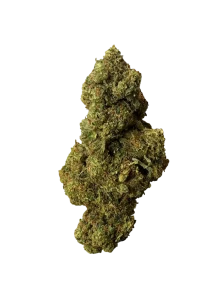 Strong CBDAnimal Tsunamifrom 5.60 €/gVoir
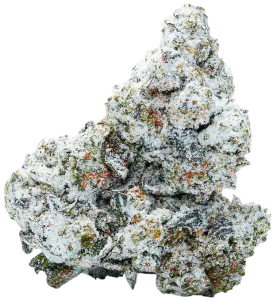 HashSub Zerofrom 4.00 €/gVoir
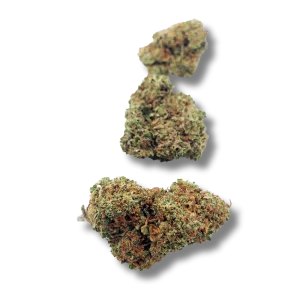 Small budsSmall Bud Bubble Gumfrom 0.90 €/gVoir
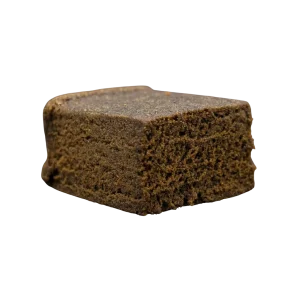 HashGold Gaz Marocainfrom 4.68 €/gVoir