Since 26 June 2025, you can no longer legally buy cannabis in Thailand without a Thailand cannabis prescription. The flower is once again a controlled herb, reserved for medical use, and shops may only sell it against the official Phor Tor 33 (PT 33) form, filled in by an authorised practitioner. In short: yes, a European tourist can get a prescription, but recreational use is banned, smoking in public is penalised and nothing may leave the country, least of all in a suitcase bound for Paris, Frankfurt, Amsterdam or London.
To get a prescription you need to be 20 or over, show your passport and go through a genuine consultation with a doctor, pharmacist, dentist or practitioner of Thai or Chinese traditional medicine. A PT 33 covers 30 days of treatment at most, is not renewed automatically, and you can only buy the quantity written on it.
On the ground, things are blurrier: plenty of shops still sell, sometimes after a “consultation” lasting a few minutes. This guide covers the procedure, the 2026 rules, the real risks for a traveller, what happens at customs when you land back in Europe, and the bill approved on 22 September 2026, which aims to turn dispensaries into medical establishments.
The essentials in 30 seconds
• Cannabis: medical use only since 26 June 2025, bought on a PT 33 prescription (30 days maximum), from age 20.
• CBD: extracts containing 0.2% THC or less need no prescription; importing cannabis-based products into Thailand is still banned.
• Tourists: smoking in public can cost 25,000 baht (around €670) and up to 3 months in prison; taking cannabis out of Thailand is illegal.
• Back in Europe: a Thai prescription is recognised nowhere. Arriving with cannabis is treated as importing a drug, even in Germany, where adults may legally possess it.
 Best-sellerSmall Bud AK-47from 0.90 €/gVoir
Why a Thailand cannabis prescription has been compulsory since 2025
In 2018, Thailand became the first country in South-East Asia to allow medical cannabis. On 9 June 2022 it went much further and removed the flower from the list of narcotics. With no law to regulate sales, thousands of shops opened in Bangkok, Phuket, Pattaya and Chiang Mai, and ganja was sold almost like an everyday consumer product. For a few years, it was a talking point for every backpacker on Khao San Road, wherever in Europe they came from.
The backlash came from the Ministry of Public Health. A notification on controlled herbs (cannabis), published in the Royal Gazette on 25 June 2025, came into force on 26 June 2025: cannabis flower may now only be sold on prescription, for medical use. The same notification bans online sales, vending machines and advertising, and rules out sales near temples, student halls, parks and amusement parks.
The market took the hit. According to The Nation, of the 18,433 shops on record at the end of December 2025, 8,636 licences had reached their expiry date: only 1,339 were renewed and more than 7,000 shops closed. Ministry of Public Health figures published in early 2026 still counted around 11,000 shops open at the end of 2025, and in November 2026 the authorities reported 12,279 licensed outlets, led by Bangkok and Phuket.
The direction did not change after the general election of 8 February 2026, won by Bhumjaithai, the party of Anutin Charnvirakul that had championed the 2022 decriminalisation. Re-appointed Prime Minister in March 2026, Anutin leads a government that has kept up the shift back to medical use, all the way to the September 2026 bill.
Who can legally prescribe cannabis in Thailand?
The 2025 notification recognises seven categories of practitioner who may fill in the Phor Tor 33 form:
- medical doctors;
- Thai traditional medicine practitioners;
- applied Thai traditional medicine practitioners;
- registered folk healers;
- Chinese medicine practitioners;
- pharmacists;
- dentists.
The practitioner must work in a healthcare setting such as a clinic or hospital, and use the official PT 33 form. According to the authorities’ position as reported by the law firm Tilleke & Gibbins, an online chat followed by a prescription sent by messaging app or email does not meet the rule. A prescription from your doctor in Berlin, Madrid or Lyon does not replace a Thai PT 33 either: European foreign ministries, like the UK Foreign Office, are clear that you need a Thai-issued medical prescription.
Which conditions are accepted in 2026?
The notification lists conditions for which cannabis may be prescribed, and leaves the practitioner some discretion for other situations. They include:
- chronic pain, joint or muscle pain, and spasms;
- insomnia, anxiety and depression;
- loss of appetite, nausea and vomiting (particularly linked to cancer treatment);
- Parkinson’s disease, Alzheimer’s disease and epilepsy.
The decision is the practitioner’s: they assess your situation and can refuse. A prescription is never an entitlement, and making up a story to get one already takes you outside the medical framework the law requires.
Getting your PT 33 prescription step by step
Step 1: choose an approved healthcare setting
Aim for a clinic, hospital or medically run dispensary where an authorised practitioner works. Ministerial Regulation No. 2 of 2026 (B.E. 2569), in force since 30 April 2026, now limits flower sales to four kinds of establishment: healthcare facilities, pharmacies, licensed herbal product shops and traditional practitioners’ clinics. A trained, certified member of staff must be present throughout opening hours, and licences issued before this regulation cannot be renewed on the old terms.
Step 2: the consultation
Show your passport: you must be 20 or over, even if you can legally buy cannabis at 18 back home in Germany or in a Dutch coffee shop. The practitioner will ask about your symptoms, your medical history and any treatment you are taking. Tell the truth, including about medication you take at home: this is a medical consultation, not a box-ticking exercise.
Step 3: check the Phor Tor 33 form
If the practitioner decides cannabis is appropriate, they fill in the PT 33. They set the product, the dosage and the duration. Before you leave, make sure the form is complete and legible:
- your full name, exactly as it appears on your passport;
- the product, the quantity and the dosage;
- the length of treatment, 30 days at most;
- the practitioner’s name and signature.
The document is single-use: there is no automatic renewal. Beyond 30 days, you need a new consultation. Keep it on you, with a copy on your phone.
Step 4: buying from a licensed outlet
The seller must check your ID and your prescription, then keep it for at least a year. They may only sell you what is written on the PT 33. Many local guides mention a ceiling of around 30 grams a month; in reality, the prescription is what counts. The flowers must come from GACP-certified farms (good agricultural and collection practices). Smoking on the premises is banned, except under medical supervision.
At a glance: steps, rules and cost of the prescription
Consultation fees are not regulated: there is no official price list, and each establishment sets its own. Ask the price before the consultation, and be wary of a consultation charged like a simple entry fee.
| Step | What the rule says | Indicative cost |
|---|---|---|
| Consultation | Authorised practitioner, in a healthcare setting, aged 20+, passport | Set freely by the establishment |
| PT 33 form | Official paper prescription, 30 days of treatment at most | Usually included in the consultation |
| Purchase | Licensed outlet, quantity written on the prescription | Varies by establishment |
| Beyond 30 days | No automatic renewal | New consultation |
Bangkok, Phuket, Pattaya: the law and reality in 2026
On paper, the rule is simple: no prescription, no sale. In practice, many shops that opened before the reform are still selling, especially in tourist districts. Some ask for nothing. Others offer an express “consultation” at the counter, with a form signed in a few minutes. Our guide to cannabis shops in Bangkok shows what the capital’s dispensaries look like since the reform.
That does not change the law. A rushed consultation, with no real assessment and no identifiable practitioner, does not protect you: what matters is whether the prescription is valid, not the till receipt. Thailand’s Office of the Narcotics Control Board reminded retailers in 2026 that buds may only be sold against a prescription of 30 days or less, and in November 2026 the Ministry announced a crackdown on outlets selling without prescriptions, letting customers smoke on site or selling online, with repeat offenders facing licence revocation. Islands such as Phuket have a reputation for being stricter than Bangkok, even though the rules are the same nationwide.
For the seller, the stakes are high: breaking the sales rules is punishable by up to 1 year in prison and/or a 20,000 baht fine (around €540), with suspension and then withdrawal of the licence. For the buyer, the texts are less detailed, but without a PT 33 you cannot justify what you are carrying: expect seizure and some explaining to the police.
The risks for a European tourist
- Smoking in public: it counts as a nuisance under the Public Health Act, punishable by a 25,000 baht fine (around €670) and up to 3 months in prison, prescription or not. Use must stay private, somewhere it is accepted.
- Buying outside a licensed outlet (street, messaging apps, delivery): this is outside any legal framework, and online sales have been banned since June 2025.
- Leaving the country with cannabis: the UK Foreign Office travel advice, one of the most detailed on the subject, states that taking cannabis out of Thailand without export permission is illegal, with fines starting at 30,000 baht per kilogram (about €800) and detention if unpaid. Travellers have been caught doing exactly that, including while in transit. Neighbouring countries such as Malaysia and Singapore punish trafficking extremely severely.
- Arriving in Europe with cannabis: even bought on prescription in Thailand, it becomes an illegal import the moment you land, in every European country. More on this in the section on coming home below.
- Other drugs: Thailand punishes their possession with long prison sentences, and the possession of class A drugs can lead to the death penalty.
What about CBD?
CBD follows separate rules. Cannabis extracts and products containing at most 0.2% THC are not treated as narcotics and need no prescription. Above that threshold, the extract stays under narcotics law. This threshold applies to extracts (oils, cosmetics, supplements); a flower sold as “CBD” is still a cannabis flower, so do not assume it escapes the prescription rule.
One trap comes up again and again: do not pack any CBD products from home. The Tourism Authority of Thailand reminds visitors that importing cannabis-based products is banned, and Thai customs will not distinguish between a flower bought legally in a French shop and anything else.
Back in Europe, the picture is the reverse. CBD flowers and hash under 0.3% THC are legal in France and in many EU countries — check the rules in your country before ordering. They are not legal everywhere: in the United Kingdom, for example, smokable CBD flowers are treated as controlled cannabis. Where they are allowed, they are the simplest way to find the aromas of a Thai trip without a prescription or a customs desk: our organic CBD flowers and CBD resins and hash are shipped from France across Europe, with lab-tested batches. If you are curious about what the research really says, read our page on the benefits of CBD.
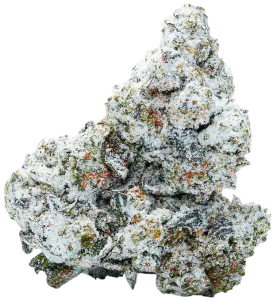
Sub Zero
A Thai x USA cross grown indoors, under 0.3% THC with a lab-tested batch: the taste of the trip, without the PT 33. Legal in France and in many EU countries under 0.3% THC — check the rules in your country.
What is coming: the September 2026 bill
On 22 September 2026, the Cabinet approved a Cannabis Control Bill presented by Public Health Minister Pattana Promphat and sent it to the House of Representatives. The text is not yet in force: Thai press reports expected it to reach Parliament around January 2027. What it provides for:
- use limited to care supervised by healthcare professionals and to research, dispensed on a prescription signed by a doctor;
- three-year licences for cultivation, processing, import, export and sale;
- shops converting into medical establishments, with a resident doctor, to renew their licence (current licences expire by 2028 at the latest);
- a ban on sales to under-20s and to pregnant or breastfeeding women, and near schools, temples, student halls and parks;
- an advertising ban, registration of cultivation and tougher penalties, the amounts of which have not yet been published.
For a traveller the outcome is clear: the neighbourhood “weed shop” is giving way to the clinic, and the prescription will no longer be a formality.
Coming home: Thailand vs European cannabis laws
This is where many travellers get caught out. A PT 33 is valid in Thailand only. No European country recognises it, and flights from Bangkok land outside the Schengen area, so you go through customs on arrival wherever you live.
Patients who travel with medical cannabis inside Europe use a Schengen certificate (Article 75 of the Schengen Convention). It only covers a prescription issued in your country of residence, for trips between Schengen states, for 30 days at most, and each destination still decides what it accepts. A Thai PT 33 fits none of these conditions.
| Country | Cannabis at home (November 2026) | Landing with cannabis bought in Thailand |
|---|---|---|
| Thailand | Medical only, on a PT 33 prescription, from age 20 | Taking it out without export permission is illegal |
| France | Cannabis is a narcotic and use is an offence; CBD flowers and hash under 0.3% THC are legal | Importing a narcotic: up to 10 years in prison |
| Germany | Adults may possess up to 25 g in public and 50 g at home since April 2024 | Importing is still an offence: up to 3 years in prison or a fine (more for large amounts) |
| Netherlands | Tolerated in coffee shops, 5 g per transaction | Importing a soft drug: up to 4 years in prison |
| Spain | Private use is not a crime; use or possession in public is fined from €601 | Can be prosecuted as smuggling or drug trafficking |
| United Kingdom | Class B drug; medical cannabis only from a UK specialist doctor | Importing a class B drug: up to 14 years in prison (official warning) |
Germany deserves a word, because it is where the confusion is greatest. Legal possession at home does not make importing legal: the Consumer Cannabis Act (KCanG) only covers cannabis that stays within its own framework, and bringing it across the border remains a criminal offence. The same logic applies to every trip: our article on what you can bring back from Amsterdam explains how customs treat cannabis bought legally abroad, and buying “legal” cannabis online and having it posted is no safer, as our piece on ordering Dutch cannabis online shows.
The legal route, where your country allows it, is much simpler: French-grown, organic CBD flowers and hash under 0.3% THC, delivered to your door. If you liked the small, dense buds sold in Bangkok, our CBD small buds are the budget-friendly version, and our CBD pre-rolls save you the rolling. For a hash closer to the old-school traditions of Asia, try the Lebanese hash.
FR Organic Pack
Flowers and hash 100% grown in France, organic, under 0.3% THC with lab-tested batches. Shipped across Europe: legal in France and in many EU countries — check the rules in your country.
One more point for when you get home: THC can remain detectable for several days, and roadside saliva tests in France, Germany, Spain or the UK do not care where you used it. Our article on saliva drug tests and the myths around them explains why the only safe option is not to drive.
Frequently asked questions
What is a PT 33 in Thailand?
The Phor Tor 33 (PT 33) is the official prescription form for medical cannabis. Filled in by an authorised practitioner, it sets the product, the quantity and a duration of 30 days at most.
Can a European tourist get a cannabis prescription in Phuket or Bangkok?
Yes, the rules are the same across the country: aged 20 or over, passport and a consultation with an authorised practitioner, who can refuse. A prescription from a European doctor is not valid in Thailand.
Can I bring cannabis back to Europe with my Thai prescription?
No. Taking cannabis out of Thailand without export permission is illegal, and no European country recognises a PT 33. Arriving with it amounts to importing a drug, prescription or not.
Cannabis is legal in Germany: can I bring some back from Thailand?
No. The German law of April 2024 allows adults to possess cannabis, but importing it remains an offence punishable by up to 3 years in prison or a fine, and more for large amounts.
Can you smoke cannabis in Thailand in 2026?
Recreational use is banned. With a prescription, use must stay private: smoking in public can lead to a 25,000 baht fine and up to 3 months in prison.
Does CBD need a prescription in Thailand?
No, for products whose extract contains 0.2% THC or less. However, importing cannabis-based products, including CBD bought in Europe, is banned.
What does a shop selling without a prescription risk?
Up to 1 year in prison and/or a 20,000 baht fine, plus suspension and then withdrawal of its licence. The buyer cannot justify possession if checked.
In short: your Thailand 2026 checklist
- Choose an approved healthcare setting with an authorised practitioner.
- Go through a real consultation, passport in hand, aged 20 or over.
- Check your PT 33: name, product, quantity, duration, practitioner’s name and signature.
- Buy only from a licensed outlet, and only the prescribed quantity.
- Never in public, never in your luggage when you leave, and never through customs on the way home.
Thailand is no longer the free-for-all it was between 2022 and 2025, and the September 2026 bill will tighten things further. Back home, the legal options depend on your country: CBD flowers and hash under 0.3% THC where they are allowed, and everywhere, accessories such as herb vaporisers or papers and grinders, the only part of this world you can pack in your suitcase without a second thought.
This article is for information only and is not legal advice. Information checked in November 2026; laws change, so check them before every trip, starting with your own foreign ministry’s travel advice for Thailand.
Nos meilleures ventesView all
Organic small budsAK-47from 0.90 €/gVoir HashOgivefrom 6.56 €/gVoir
 Strong CBDMike Tysonfrom 4.34 €/gVoir
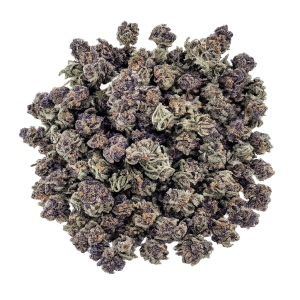 Small budsSmall Buds OG Purple Kushfrom 1.50 €/gVoir
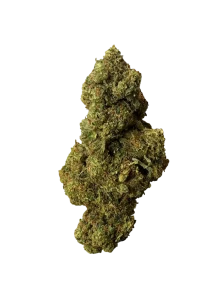 Strong CBDAnimal Tsunamifrom 5.60 €/gVoirHashSub Zerofrom 4.00 €/gVoir
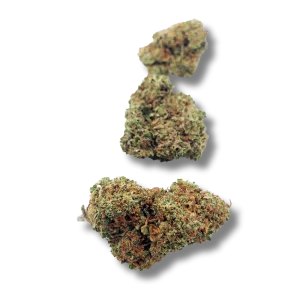 Small budsSmall Bud Bubble Gumfrom 0.90 €/gVoir
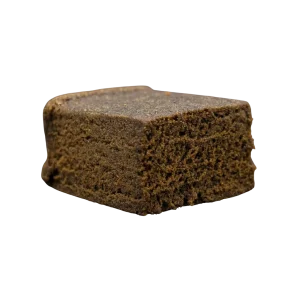 HashGold Gaz Marocainfrom 4.68 €/gVoir