Cigarette prices in Europe have never been so far apart: in late 2026, a pack of 20 costs about €20 in Ireland and the UK, €13.50 in France, around €9 in Germany and barely €6 in Spain, while Bulgaria sells it for about €3. A carton of 200 cigarettes can therefore cost €200 in Dublin and €60 in Madrid, for the same brand made in the same factory. That is the raw picture of the European tobacco market at the end of 2026, after a new wave of tax rises: +€1 a pack in Ireland on 7 October 2026 (The Irish Times), another UK duty rise on 1 October, a new official price list in France on 1 November, and a four-step tobacco tax increase voted in Germany for 2027 to 2030.
If you live in Europe or travel a lot, you’ve probably done the maths at the kiosk and winced. Moving from one country to the next can halve or double the price of your pack, which is exactly why smokers compare, stock up on holiday and wonder whether any of this still makes sense.
In this guide we walk you through the big 2026 comparison of cigarette prices across Europe and the world: a giant table of around 25 countries, the destinations that really matter (Spain, Andorra, Belgium and Luxembourg, Germany, Italy, Switzerland), how many cigarettes you can bring home, the tax system behind the bill, and what 2027 holds. We also look at why more and more smokers are rethinking the habit altogether.
Cigarette prices in Europe 2026: what a pack and a carton really cost
A carton (a sleeve in the UK) is 10 packs of 20, so 200 cigarettes. In Europe, prices fall into three clear groups:
- The very expensive club: Ireland (about €20.15 for the most popular price category since Budget 2027), the United Kingdom (around £17 to £19, roughly €20) and Norway. Here a carton costs €165 to €200.
- The middle of the table: France (most popular brands at €13 to €14 a pack), the Netherlands and Belgium (around €11 to €13), then Germany and Switzerland (about €8 to €10).
- The cheap half of Europe: Austria, Italy, Spain, Luxembourg, Portugal and most of Central and Eastern Europe, where a pack costs €3 to €7.
In France, the official price list published in the Journal officiel on 4 October 2026 sets Marlboro Red at €13.50 in a hard pack and €14 in a soft pack from 1 November 2026, while a budget reference such as Pall Mall Red costs €11.20. A realistic French carton therefore costs €130 to €140. In Germany, the average pack was around €8 in mid-2026, and the tax increases voted in October 2026 will push it up every 1 January from 2027 to 2030.
For context: at €13.50 a pack, a pack-a-day smoker in France spends almost €4,900 a year. In Ireland, the same habit now costs more than €7,300 a year. Over ten years, that is a flat deposit almost anywhere in Europe. Completely mad, when you put it that way.
Giant comparison table: cigarette prices in Europe and the world in 2026
Here is the round-up. These are approximate prices observed in 2026 for a pack of 20 and a carton of 10 packs (Marlboro or the national equivalent), based on official price lists where they exist (the French Journal officiel, Spain’s BOE, Ireland’s budget) and on press and consumer price data elsewhere. Prices outside the euro area are converted and rounded, so treat them as orders of magnitude rather than exact shelf prices. France, where Jungle Kush is based, is the reference.
| Country | Pack of 20 (approx. €) | Carton of 200 (approx. €) | Difference vs France |
|---|---|---|---|
| 🇦🇺 Australia | 21.00 | 210.00 | +56 % |
| 🇮🇪 Ireland | 20.15 | 201.50 | +49 % |
| 🇬🇧 United Kingdom | 20.00 | 200.00 | +48 % |
| 🇳🇴 Norway | 16.50 | 165.00 | +22 % |
| 🇫🇷 France | 13.50 | 135.00 | reference |
| 🇳🇱 Netherlands | 12.50 | 125.00 | −7 % |
| 🇧🇪 Belgium | 11.00 | 110.00 | −19 % |
| 🇨🇦 Canada | 10.80 | 108.00 | −20 % |
| 🇨🇭 Switzerland | 9.80 | 98.00 | −27 % |
| 🇩🇪 Germany | 9.00 | 90.00 | −33 % |
| 🇺🇸 USA (average) | 8.30 | 83.00 | −39 % |
| 🇦🇹 Austria | 7.00 | 70.00 | −48 % |
| 🇮🇹 Italy | 6.50 | 65.00 | −52 % |
| 🇪🇸 Spain | 6.25 | 62.50 | −54 % |
| 🇱🇺 Luxembourg | 6.00 | 60.00 | −56 % |
| 🇭🇺 Hungary | 5.40 | 54.00 | −60 % |
| 🇵🇹 Portugal | 5.30 | 53.00 | −61 % |
| 🇷🇴 Romania | 5.20 | 52.00 | −61 % |
| 🇨🇿 Czechia | 5.00 | 50.00 | −63 % |
| 🇵🇱 Poland | 4.80 | 48.00 | −64 % |
| 🇦🇩 Andorra | 4.00 | 40.00 | −70 % |
| 🇯🇵 Japan | 4.00 | 40.00 | −70 % |
| 🇲🇦 Morocco | 3.50 | 35.00 | −74 % |
| 🇧🇬 Bulgaria | 3.00 | 30.00 | −78 % |
| 🇨🇳 China | 3.00 | 30.00 | −78 % |
| 🇹🇷 Turkey | 2.00 | 20.00 | −85 % |
| 🇻🇳 Vietnam | 1.25 | 12.50 | −91 % |
Key takeaway: inside Europe alone, the same carton costs more than six times as much in Dublin as in Sofia. And between Australia and Vietnam, the ratio is about 1 to 17. That is globalised tobacco for you: the same product, the same industry, and wildly different prices depending on local tax.
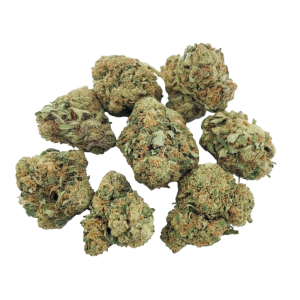
Small Buds AK-47
Organic French small buds: the same aromas as large flowers, and volume tiers that lower the price per gram. Under 0.3 % THC, lab-tested.
How many cigarettes can you bring home? EU, UK and Swiss allowances
This is where the price gap meets reality. The rules depend on where you buy and where you live (Your Europe, alcohol, tobacco and excise duties):
- Between two EU countries: no fixed limit, as long as the tobacco is duty-paid, carried by you and for your own use. Customs use guide levels of 800 cigarettes (4 cartons), 400 cigarillos, 200 cigars or 1 kg of tobacco per adult. Above that, you may have to prove the goods are not for resale.
- Entering the EU from outside (UK, Switzerland, Turkey, Morocco and so on): 200 cigarettes duty-free, and some countries apply a lower limit, as low as 40 cigarettes, to travellers arriving by land.
- From Andorra into France: a special allowance of 300 cigarettes per adult, or 400 g of rolling tobacco (French customs).
- Into the UK: 200 cigarettes, whether you come from Spain or Thailand (GOV.UK). Go over and you pay duty on everything in that category, not just the excess.
- Into Switzerland: 250 cigarettes per person per day.
Selling cigarettes bought abroad, even to friends, is smuggling everywhere in Europe: customs can seize the goods and, in some cases, the vehicle.
Les best-sellers de la boutique
Spain and the Canaries, Europe’s classic stock-up
For decades, a holiday on the Costa del Sol or a trip to La Jonquera, just over the French border, has meant a carton in the boot. On the Spanish mainland and the Balearics, prices are fixed by the State and published in the Boletín Oficial del Estado: the same price in an estanco in Barcelona, Madrid or Palma. The official list published in December 2025 put Marlboro at €6.25 a pack (BOE, 6 December 2025), and manufacturers have adjusted several brands since. That is roughly €60 to €65 a carton, less than half the French price.
The Canary Islands have their own tax regime and are usually cheaper still, but they sit outside the EU tax area: coming home from Tenerife, you’re limited to the 200-cigarette allowance, not the 800 guide level.
Andorra, the bargain with strict limits
Andorra remains one of the cheapest places in Western Europe, with a pack of Marlboro around €4 to €4.50. But the principality is not in the EU, which changes everything at customs. Coming back into France, the allowance is 300 cigarettes per person, or a carton and a half, and checks on the roads out of Andorra are frequent. Above the limit, it’s seizure and a fine. For most cross-border shoppers, Spain is now the simpler option.
Belgium and Luxembourg: one expensive, one still cheap
Belgium used to be the cheap option for northern France and for British day-trippers. Not any more: the average Belgian pack rose from €6.39 in 2020 to €10.57 in 2025, and excise went up again in 2026. The result is spectacular: according to the industry association, 44 % of the cigarettes smoked in Belgium at the end of 2025 were contraband or bought abroad (Brussels Times).
Next door, Luxembourg is still one of the cheapest countries in Western Europe, with a pack around €6, roughly half the Belgian price. For people living in Lorraine, Wallonia or Germany’s Saarland, the queues at Luxembourg’s border petrol stations say it all. As an EU country, Luxembourg lets you carry the 800-cigarette guide level back to another EU country.
Germany, the Netherlands, Italy, Austria, Switzerland: the rest of the table
Germany is in the middle: an average pack cost about €8 in mid-2026, and Marlboro rather more. In October 2026, the Bundestag and Bundesrat approved a tobacco tax increase in four steps, on 1 January of each year from 2027 to 2030; according to press estimates, the average pack could approach €12 by 2030 (ZDF).
The Netherlands has become one of the expensive countries after several sharp excise rises: a pack of a mainstream brand usually costs €12 to €13, which explains why so many Dutch smokers cross into Germany or Belgium.
Italy remains cheap, with a pack around €6.50, but its budget law plans gradual excise rises until 2028. Austria is in the same range: Marlboro has cost €7 a pack there since February 2026.
Switzerland is more expensive than Germany, at around CHF 9 to 10 a pack. It is outside the EU, so coming back into France, Germany or Italy you’re limited to the 200-cigarette allowance, and at road crossings some countries apply lower limits.
Ireland, the UK and the rest of the world
Ireland now has the most expensive cigarettes in Europe: after Budget 2027 added €1 to a pack of 20 in the most popular price category, a typical pack costs about €20.15, second in the world only to Australia (The Irish Times).
The United Kingdom is right behind. Since 1 October 2026, cigarettes are taxed at 16.5 % of the retail price plus £394.09 per 1,000, with a minimum excise of £518.75 per 1,000 cigarettes (GOV.UK, Tobacco Products Duty), and a mainstream pack costs around £17 to £19. The Tobacco and Vapes Act 2026 also creates a smokefree generation: it will be illegal to sell tobacco to anyone born on or after 1 January 2009 (GOV.UK).
Australia remains the world’s most expensive market after years of automatic excise rises. At the other end, Turkey, Vietnam and much of Eastern Europe sell packs for the price of a coffee in Paris, which explains the queues at duty-free. But once again, the limit at the EU border remains one carton.
One more warning: the cheap cigarettes sold in car parks, at markets or via social media are almost always counterfeit or smuggled. Beyond the legal risk, nobody knows what is inside them.
Why such huge price gaps? Tax explains almost everything
In the EU, the Tobacco Taxation Directive sets a floor: excise on cigarettes must be at least 60 % of the weighted average retail price and at least €90 per 1,000 cigarettes. Above that floor, each country does what it wants. France, Ireland and the Netherlands go far beyond it; Bulgaria, Poland or Hungary stay close to the minimum.
The World Health Organization recommends that taxes make up at least 75 % of the retail price of tobacco products. France, Ireland, the UK and Australia are above that level. Many countries in Eastern Europe, as well as Vietnam or Turkey, are far below it, which explains packs selling for €3 or less.
The price strategy has a documented effect: higher prices are one of the most effective levers for reducing smoking, especially among young people. But it also feeds a parallel market of cross-border shopping, smuggling and counterfeits, as the Belgian figures show. Every budget, governments weigh public health against the risk of pushing smokers towards the black market.
Looking to 2027: where are cigarette prices in Europe heading?
The direction of travel is clear. The European Commission proposed in July 2025 to revise the Tobacco Taxation Directive and raise the minimum excise to €215 per 1,000 cigarettes, while extending taxation to e-cigarettes, heated tobacco and nicotine pouches (European Commission). At the end of 2026, member states were still negotiating a compromise, which requires unanimity. If a deal is reached, prices in Spain, Italy, Luxembourg and Eastern Europe would rise most, and the gaps between countries would slowly shrink.
Nationally, Germany starts its four-step increase on 1 January 2027, Ireland and the UK raise duty every autumn, and France keeps publishing new price lists several times a year. Cigarettes are turning into a luxury product, literally.
When smoking costs as much as a rent payment: rethinking the habit
With a pack at €13.50 in France and €20 in Ireland, a pack-a-day smoker spends between €4,900 and €7,300 a year on tobacco. That is a long holiday, a car deposit, or several months of rent. No surprise that many people are looking to stop, or at least to cut down.
The most effective route remains the free support offered by health services in every European country: stop-smoking services, nicotine replacement and quit lines. For smokers who prefer to stay with ordinary cigarettes but want to ease off gradually, we have also listed the 8 cigarette brands lowest in nicotine.
Others mainly want to keep a ritual: rolling, a break in the evening, a flavour. That is one reason the legal hemp market has grown so fast in France since 2019. CBD flowers contain no nicotine and offer a wide range of aromas, from citrus to earthy notes; smoked on their own, without tobacco, they let you keep the gesture without nicotine. Let’s be honest, though: burning any plant is still combustion, so this is about taste and ritual, not health. Our CBD pre-rolls are ready to light, the small buds keep the price per gram low, and fans of a more traditional texture will find CBD resins and hash. Everything is grown or selected in France, under 0.3 % THC, from lab-tested batches, and shipped across Europe. These products are legal in France and in many EU countries under 0.3 % THC: check the rules in your country (CBD flowers are not legal in the UK or Italy, for example).
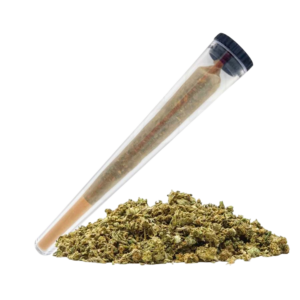
Amnesia Pre-Rolls
Pre-rolls made with 100 % organic French Amnesia flowers, no tobacco. Under 0.3 % THC, lab-tested, shipped across Europe.
If you prefer to avoid combustion altogether, herb vaporisers heat the plant instead of burning it, and roll-your-own fans will find rolling papers, filters and accessories. If you are curious about the research, we have summarised what studies actually say on the benefits of CBD, without promises.
€13.50 a pack, €20 a pack, and then? The real question for 2027
At this rate, a pack-a-day smoker in Western Europe will soon be spending €5,000 to €8,000 a year. For most households, that is no longer a habit: it is a lifestyle choice that weighs on everything else, from holidays and savings to buying a home.
So the real question is no longer where to find a cheaper carton: the answer is known, and capped by customs. It is rather: what still justifies paying €135 to €200 for 200 cigarettes in 2027, when free stop-smoking support, nicotine replacement and simply stopping are all on the table? Tax does not do everything. The personal decision starts where the price lists end, and it is probably the most useful conversation a smoker can have with themselves in 2026. And if you’re travelling, our guide to bringing things back from Amsterdam explains what customs allow and what they don’t.

FR Organic Pack
100 % French CBD flowers and hash, under 0.3 % THC, lab-tested. A simple way to discover the range, delivered across Europe.
🌿 To explore legal hemp, take a look at Jungle Kush, a French CBD shop selecting its producers carefully since 2019, with its French organic CBD range of flowers and hash. (Legal in France and in many EU countries under 0.3 % THC: check the rules in your country.)
Nos meilleures ventesView all
Organic small budsAK-47from 0.90 €/gVoir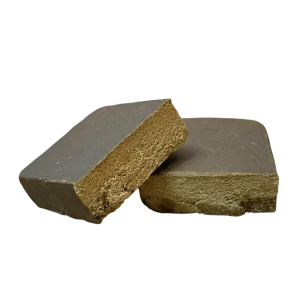 HashOgivefrom 6.56 €/gVoir
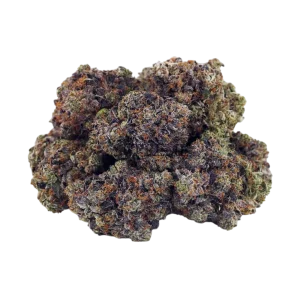 Strong CBDMike Tysonfrom 4.34 €/gVoir
 Small budsSmall Buds OG Purple Kushfrom 1.50 €/gVoir
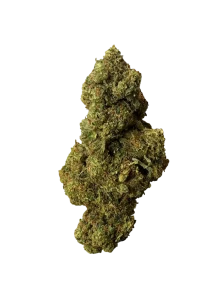 Strong CBDAnimal Tsunamifrom 5.60 €/gVoir
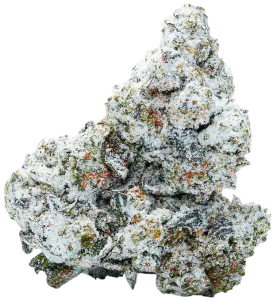 HashSub Zerofrom 4.00 €/gVoir
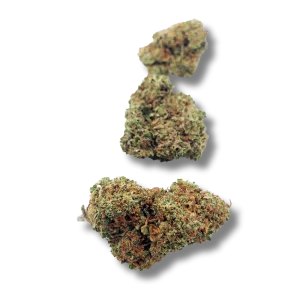 Small budsSmall Bud Bubble Gumfrom 0.90 €/gVoir
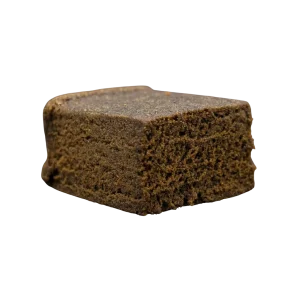 HashGold Gaz Marocainfrom 4.68 €/gVoir